
Living in the Netherlands: Everyday Life, Work & What to Expect

Why People Are Moving to the Netherlands
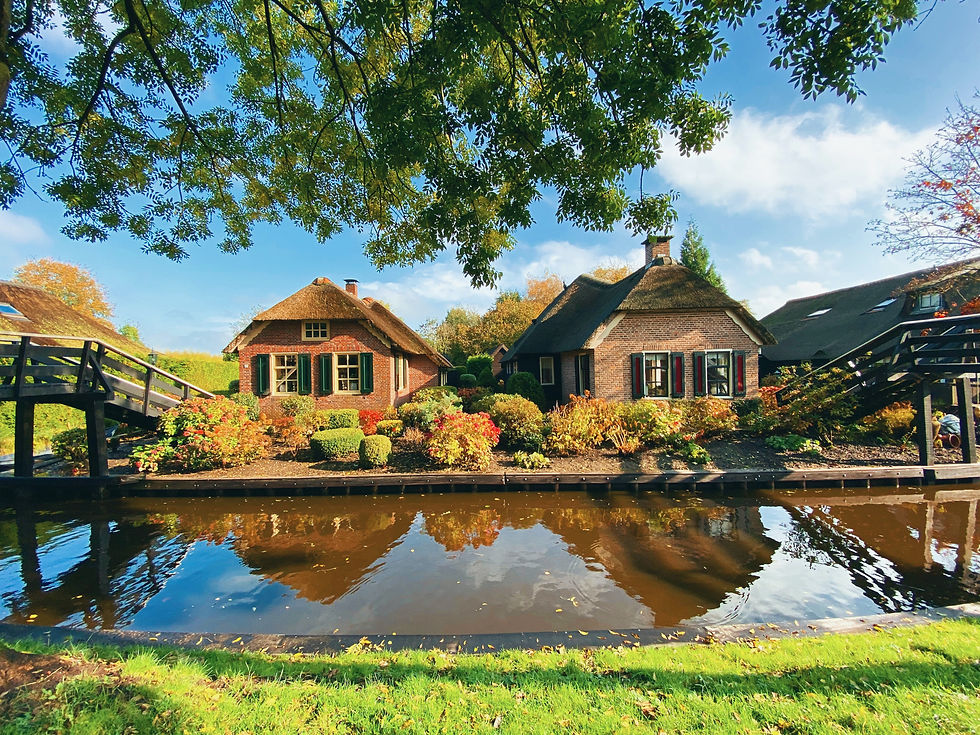
The Netherlands is compact, flat and wildly efficient – but also cosy, social and surprisingly relaxed. Think canals, bikes, tulip fields, festivals, and a state that’s very good at making everyday life work.
It’s consistently ranked among the top countries in the world for quality of life, thanks to strong public services, safety, infrastructure and a healthy work–life balance.
It suits:
Young professionals in tech, finance, design, logistics and start-ups
Skilled trades & technicians in engineering, construction, maintenance, logistics, hospitality and healthcare
Families who want safe neighbourhoods, good schools and a kid-friendly culture
Students & graduates looking for English-taught degrees and a clear early-career pathway
Long-term planners who value stability, rights and clear residence rules
Benefits:
High quality of life and strong social systems
Serious labour shortages in many skilled sectors (great for candidates with experience)
Superb infrastructure & connectivity – easy cycling, great trains, quick flights across Europe
Day-to-Day Life
Most Dutch days are structured, efficient and intentionally not too stressful.
In cities like Amsterdam, Rotterdam, The Hague, Utrecht, Eindhoven and Groningen, people commute by bike, tram, metro or train. Many live close enough to cycle to work in 15–25 minutes. Flexible and hybrid working is common in white-collar jobs, so you’ll often see people starting a bit later or working from home some days.
A typical weekday:
Morning: quick coffee, school run by bike, commute along canals or cycle lanes
Day: focused work, lots of meetings but usually with clear agendas
Evening: pick-up from after-school care, sports club, casual dinner, maybe a drink on a terrace in summer
Weekends:
Markets, brunch and fietsen (bike rides)
Day trips to the beach, forests, neighbouring towns or even Belgium/Germany
Festivals, museums, canal cruises, football games and park picnics
City vs regional life: Big cities are international, busy and pricier, with more English-speaking jobs. Smaller cities and villages offer more space, quieter streets and strong community – but you’ll rely more on Dutch and local networks for work and social life.
For Singles
You’ll find endless meetups, co-working spaces, gyms, language exchanges, live music and bar terraces. House-shares (especially in Amsterdam, Utrecht, Rotterdam) are common and often where you’ll build your first friend group.
For Families
Life revolves around school, after-school care, sports clubs and a lot of outdoor play. Kids cycle early, playgrounds are everywhere, and many neighbourhoods feel safe enough for children to move around quite independently.

Cost of Living
Is the Netherlands affordable for you?
The Netherlands offers fantastic quality of life, but it’s not a “cheap” destination – especially around housing. It sits in the higher range globally for cost of living, driven by rent, groceries and transport.
Housing & Rent
Most expensive: Amsterdam, central Utrecht, popular parts of The Hague and Haarlem
Mid-range: Rotterdam, Eindhoven, Groningen and many medium cities / commuter towns
More affordable: smaller towns and more rural areas, especially further from the Randstad (the western urban belt)
Demand for housing is high, with widely discussed shortages in many cities.
Everyday Costs
Groceries: mid-to-high compared with much of Europe, but manageable if you cook at home and use mainstream supermarket chains.
Transport: public transport is excellent but not cheap; estimates put average monthly transport spend around €273 in 2025, making it a major budget item after housing and groceries.
Eating out: coffee and casual dining are reasonable; frequent restaurant meals and nights out will quickly push your budget in big cities.
Monthly Budget Examples
Single professional
Room in a flatshare or compact studio in a city
Public transport pass + bike
Comfortable life with socialising and some travel on a solid mid-level salary outside the very priciest postcodes
Couple
One-bed or small two-bed apartment in a city or bigger place in a nearby town
One shared car (maybe) + bikes and trains
Good lifestyle and some savings if both earn decent salaries
Family with 2 kids
Two- or three-bed home in a suburb or smaller city
One or two cars depending on location, plus bikes for everyone
Major costs: rent/mortgage, childcare, sports and activities
Strong quality of life on skilled-worker incomes with careful city choice

Where Newcomers Live
You’ll find expats everywhere, but some places are magnets:
Amsterdam & Amstelveen: international HQs, finance, tech, creative industries – and the tightest housing market.
Rotterdam: Europe’s biggest port, logistics, industry, architecture and an increasingly international scene.
The Hague: government, international law, NGOs and embassies.
Utrecht: central rail hub, services, education, growing tech and start-ups.
Eindhoven & Brainport region: high-tech, engineering and design centre.
Apartments vs houses:
City cores: mostly apartments (flats), often in older canal houses or modern blocks.
Suburbs/smaller towns: more terraced and semi-detached houses with small gardens.
How renting works (quick version):
Expect 1–2 months’ deposit plus first month’s rent.
Landlords often want proof of income, ID and sometimes registration with the municipality.
There’s a regulated social housing system, but waiting lists can be long; newcomers typically rent in the private market first.
Family:
Family-friendly areas blend: good schools, cycle paths, playgrounds, low-traffic residential streets, and fast access to supermarkets and public transport. Many expat families choose leafy suburbs with quick train links into the city.
Working in the Netherlands
The Dutch labour market is tight and getting tighter: many employers simply can’t find enough people. Shortages are flagged in IT, engineering, healthcare, construction, logistics, education, services and hospitality, among others.
Main industries hiring foreigners:
Tech & IT: software, cloud, data, AI, cybersecurity, product and project roles
Engineering & high-tech: electronics, semiconductors, manufacturing, renewable energy, mechanical and civil engineering
Healthcare: nurses, carers, specialists and allied health staff
Construction & trades: fitters, installers, electricians, HVAC, supervisors
Logistics & transport: port operations, warehousing, trucking, supply chain
Finance & business services: shared-service centres, risk, compliance, accounting, consulting
Typical working hours, leave & public holidays:
Standard full-time is about 36–40 hours per week.
Holiday allowances are solid (usually around four weeks minimum plus public holidays), and many employers offer more.
Work–life balance is a real priority; part-time and flexible schedules are common, even in senior roles.
Work culture:
Direct, practical and quite informal – first names and straight talk are normal.
Hierarchies tend to be flat; your opinion is expected, not just tolerated.
Meetings start on time and aim for consensus.
Work–life boundaries are respected; it’s not a “live at the office” culture.
Salaries in the Netherlands – Big Picture
The Netherlands has a relatively high cost of living, but salaries for skilled roles are competitive, especially when combined with strong employee protections and benefits.
Broadly:
Skilled trades / technical staff in shortage areas can earn solid incomes, particularly with overtime or allowances.
Professionals (IT, engineering, finance, healthcare, logistics) can reach salary thresholds for the Highly Skilled Migrant scheme or EU Blue Card in the right roles.
The key is matching salary + city + housing so that your income still allows savings and travel.

How People Usually Move to the Netherlands
For non-EU nationals, the Netherlands has several well-defined pathways, especially for skilled workers.
Common routes include:
Highly Skilled Migrant (Kennismigrant): fast-track route for highly qualified professionals. You need a recognised sponsor employer and to meet minimum salary thresholds; your employer applies for the permit.
EU Blue Card: for highly educated professionals with a recognised degree and higher salary threshold; offers EU-wide mobility benefits.
Orientation Year for Highly Educated Persons: a 1-year job-search residence permit for certain foreign graduates of Dutch or top international universities.
Intra-Corporate Transfers: for managers/specialists moved within a multinational.
Standard work permits: for other categories where labour-market needs are proven.
Study visas → work routes: many students later move into Orientation Year or Highly Skilled Migrant pathways.
A typical skilled worker journey might look like:
Employer recognised by the IND offers you a job → employer applies for Highly Skilled Migrant or EU Blue Card → once approved, you collect your visa and travel → on arrival, you collect your residence card and register locally → after several years of qualifying residence, you can look at permanent options.
Rules and salary thresholds are updated fairly regularly, so it’s vital to work with current information for your occupation.
Healthcare and Safety
Healthcare is one of the Dutch system’s strongest features.
Healthcare basics:
The Netherlands has universal coverage delivered through compulsory basic health insurance from private insurers, tightly regulated by the government.
Almost all residents are insured; funding comes from premiums and income-linked contributions.
Standard packages cover GP visits, hospital care, many medications and maternity care, with deductibles and co-pays.
Seeing a doctor / emergencies:
You register with a local huisarts (GP), who is your first point of contact.
For emergencies, hospitals and emergency services are well organised across the country.
International rankings place Dutch healthcare among the best performers globally for outcomes and innovation.
Safety:
The Netherlands is widely regarded as safe and stable, with low rates of serious crime, strong institutions and a high level of trust in public services.
Family:
Parents like the structured GP and paediatric system, access to maternity and child health services, and a general feeling that kids can move around relatively independently.

Schooling, Childcare & Family Life
The Dutch system is very child-centred and big on independence.
School system basics (high-level):
Compulsory education runs roughly from 5 to 16, with many children starting school at 4.
There’s a mix of public, religious and special-philosophy schools, all following national standards and inspected at state level.
International and bilingual schools exist in major cities, especially around international business hubs.
Childcare & aftercare:
Daycare (kinderdagverblijf), preschools and after-school care (BSO) are widely used; costs vary but are partially offset by government childcare benefits for eligible families.
Family lifestyle:
Kids’ sports clubs (hockey, football, swimming, gymnastics, dance) and music lessons are very common.
Parks, playgrounds and safe cycle paths mean lots of outdoor time.
School–life balance is taken seriously; homework is usually moderate in earlier years.
Transport, Commuting & Getting Around
If you like bikes and trains, you’ll love the Netherlands.
Public transport:
A dense, reliable rail network connects almost every city and many towns.
Trams, metros and buses cover urban areas; schedules are usually frequent and well-integrated.
The national OV-chipkaart and newer payment systems make switching between trains, buses, trams and metros straightforward.
Bike culture:
Cycling is often the fastest, most flexible way to get around cities and suburbs.
Separated bike lanes, bike traffic lights and secure parking are standard.
Car culture:
Cars are useful for some families and rural residents, but owning one is relatively expensive (taxes, parking, fuel) – many urban expats skip it.
Driving rules that matter:
Drive on the right-hand side.
Strict enforcement of speed limits, drunk-driving rules and mobile-phone use.
Watch for bikes at all times – they have real infrastructure and real priority.

Culture, Language and Fitting In
Dutch culture mixes pragmatism, directness and a big love of gezelligheid – roughly “cosiness” or “nice togetherness”.
Language:
Dutch is the national language, but English proficiency is among the highest in the world; you can get by in English in many workplaces and cities.
Long-term, learning Dutch is key to deeper integration, more job options and easier bureaucracy.
Social norms:
Be on time, be honest, and don’t exaggerate – understatement is a virtue.
People separate work and private life, but once you’re in someone’s circle, you’re in.
Splitting the bill (“going Dutch”) is absolutely a thing.
Work communication style:
Direct and opinionated – people say what they think, but usually with a problem-solving mindset.
Debate is normal; hierarchy doesn’t mean silence from juniors.
Festivals, holidays & traditions:
King’s Day, Sinterklaas, Christmas, New Year’s, plus local festivals and endless music and food events
Football, ice skating (when canals freeze), sailing and cycling as social glue
Finding Your People
The Netherlands has been trading internationally for centuries; foreign faces are nothing new.
You’ll find:
Expat and international communities in all major cities
Co-working spaces, meetups, tech communities, creative scenes and start-up hubs
Sports clubs, faith groups and cultural associations from all over the world Pararius.nl+1
Singles:
Meet people via language courses, sports clubs, co-working spaces, volunteer groups and hobby meetups. The more consistently you show up in the same circles, the faster you move from “the new person” to “part of the group”.

Weather, Nature and the “Feel”
The Dutch climate is mild maritime:
Cool, damp winters with some frost and the occasional light snow
Mild summers with a few hot weeks, lots of days in the low-to-mid 20s (°C)
Plenty of wind and regular rain showers – but also long, light evenings in summer
Nature & outdoors:
North Sea beaches and dunes, islands (Wadden Islands), lakes and rivers
Green polders, national parks, forests and wetlands
Endless cycling and walking routes linking towns, villages, nature and coastline
Who will love it?
Cyclists and walkers who enjoy flat landscapes and well-designed routes
Urban lovers who prefer mid-sized, well-organised cities to mega-cities
Families & planners who value stability, safety and kid-friendly infrastructure
Your First Month: What to Do First
Your first 30 days will fly by. Here’s a practical starter checklist:
Register with the municipality (BRP): Once you have an address, register at the local town hall; this links you to the population register and is needed for almost everything.
Get your BSN (citizen service number): Often issued at registration or shortly after; you need it for work, banking and taxes.
Health insurance: Take out Dutch basic health insurance within the legal timeframe once you’re resident and registered.
Bank account: Open a local bank account so your salary, rent and bills are easy to manage.
Short-term → long-term housing: Use temporary accommodation while you view neighbourhoods, understand commutes and learn real prices.
Transport setup: Get an OV-chipkaart or set up contactless travel, buy a bike and learn your key routes.
Schools & childcare: If you have children, contact schools and daycare early; demand can be high in popular areas.
Common early mistakes:
Underestimating housing competition in big cities
Delaying health insurance or registration (which can cause admin headaches later)
Relying only on expat bubbles and never starting Dutch classes

Building a Long-Term Life
The Netherlands offers clear pathways from temporary stay to long-term residence – though some rules are evolving.
In broad strokes:
After five years of lawful stay on a non-temporary residence permit (e.g. Highly Skilled Migrant, EU Blue Card, family) and meeting integration requirements, many people can apply for permanent residence.
Naturalisation rules currently require several years of residence and integration; there is a proposal under discussion to extend the standard naturalisation period from 5 to 10 years, which has not yet fully taken effect and may still change.
The big picture: if you invest in language, integration and stable residence, the Netherlands offers a predictable, rights-based path to staying long term.
How Inhire Helps You Make the Move
The Netherlands is an incredible place to live and work – but getting the right role, visa and city lined up can be complex. That’s exactly where Inhire fits in.
We help you:
Match with Dutch employers who are actively hiring international talent in IT, engineering, healthcare, construction, logistics, finance and more – roles that are directly linked to real labour shortages.
Connect with trusted local migration partners who understand the Highly Skilled Migrant scheme, EU Blue Card, Orientation Year and family/long-term options – and who stay on top of changing policy.
Plan your relocation and settlement – which city fits your profession and budget, how to structure your first 30–90 days, and what your realistic monthly costs will look like.
Tap into community, content and ongoing support, so you’re not trying to decode Dutch forms, contracts and housing alone.
Create your Inhire profile, tell us the Netherlands is your target, and we’ll start mapping your path – from first interview and visa choice to cruising to work on your own bike, feeling like you’ve lived there for years.


Comments